Lied: Sonja Herold & Simeon Hamman – Stille Nag, Heilige Nag


Jesus vir my, Jesus vir ons, Jesus vir almal.
Praise & Worship
Lied van die Week
Song of the Week
‘n Plek waar ons Christelike musiek eksploreer.
Gospel Music




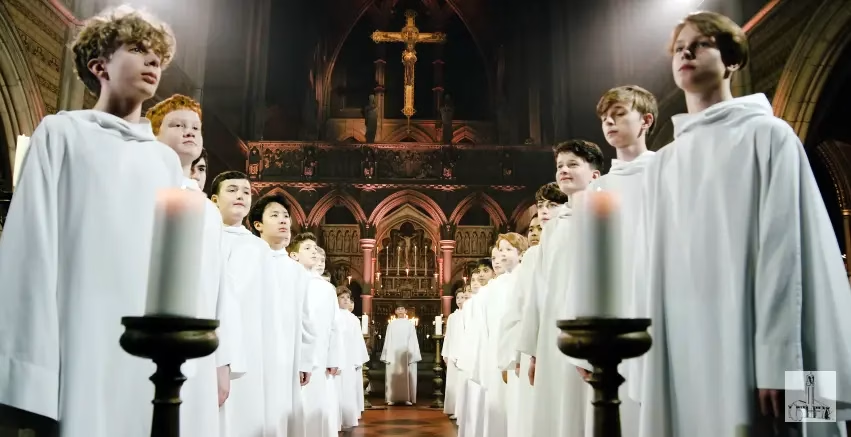
Song by M Leontovych Arranged – Robert Prizeman
Hark how the bells
Sweet silver bells
All seem to say
Throw cares away
Christmas is here
Bringing good cheer
To young and old
Meek and the bold
Ding dong ding dong
That is their song
With joyful ring
All caroling
One seems to hear
Words of good cheer
From everywhere
Filling the air
Oh how they pound
Raising the sound
O’er hill and dale
Telling their tale
Gloria in excelsis deo
Gloria, gloria
Hark how the bells
All seem to say
Christmas is here
Bringing good cheer
To young and old
Meek and the bold
Ding dong ding dong
That is their song
With joyful ring
All caroling
One seems to hear
Words of good cheer
From everywhere
Filling the air
Oh how they pound
Raising the sound
O’er hill and dale
Telling their tale
Gaily they ring
While people sing
Songs of good cheer
Christmas is here
Gaily they ring
While people sing
Songs of good cheer
Christmas is here
Gloria in excelsis deo
Gloria, gloria
Hark how the bells
All seem to say
Christmas is here
Bringing good cheer
One seems to hear
Words of good cheer
From everywhere
Filling the air
Oh how they pound
Raising the sound
O’er hill and dale
Telling their tale
Gaily they ring
While people sing
Songs of good cheer
Christmas is here
Gaily they ring
While people sing
Songs of good cheer
Christmas is here
Hark how the bells
All seem to say
Christmas is here
Bringing good cheer
One seems to hear
Words of good cheer
From everywhere
Filling the air
Oh how they pound
Raising the sound
O’er hill and dale
Telling their tale
Gaily they ring
While people sing
Songs of good cheer
Christmas is here
Gaily they ring
While people sing
Songs of good cheer
Christmas is here
Merry, merry, merry, merry Christmas
Merry, merry, merry, merry Christmas
On, on they send
On without end
Their joyful tone
To every home
Hark how the bells
All seem to say
Gloria, Gloria
Ding dong ding dong
That is their song
Songwriters: William King Ross, Paul Mark Oakenfold, Mykola Leontovych.
The song is based on the Ukrainian folk chant “Shchedryk”, also known as the “Bell Carol”.
Performed by LIBERA, from the 2019 album ‘Christmas Carols with Libera’
Conductor – Robert Prizeman
Music – M Leontovych Arranged – Robert Prizeman
Soloist – Luca Brugnoli
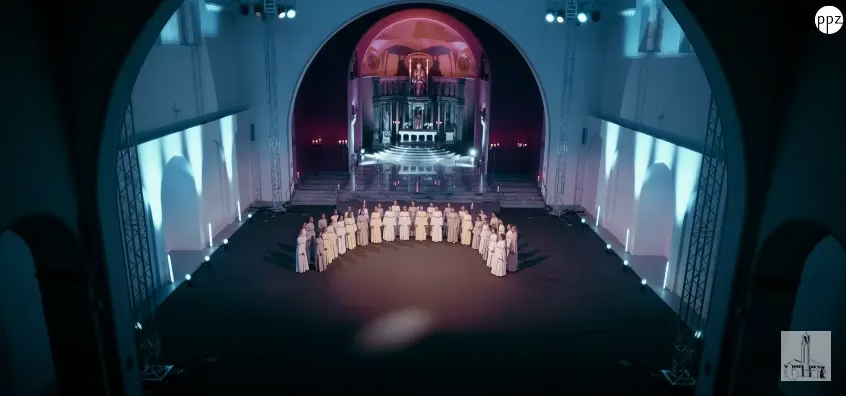
Filmed at St Augustine’s Church, Kilburn
VIdeo director – Emyr Afan
Video editor – Scott Jaeger


Die Lofdansebediening van die NG Kerk Groot-Brakrivier verwoord die lied “Ierse Seënbede” deur Anneli van Rooyen met ritmiese bewegings.
Ons lofdansebediening, nooi u om saam die Here te loof deur saam te dans. Ons beweeg ritmies saam op die maat van musiek en wil graag mense seën met die bediening. Kontak ons gerus indien u betrokke wil raak.
Lofdansebediening tydens die gemeente konsert
Lofdansebediening tydens die Klub 50 ontmoeting
Seënbede
Die Here is voor jou, Sy lig op jou pad
Hy neem jou na waters van rus
Die Here is langs jou, jou vesting en rots
Hy laat jou staan op die hoogte
Die Here is om jou, die duister word lig
Hy laat jou lamp helder skyn
Die Here is bo jou van Hom kom jou hoop
Jou siel sal Hy ewig bewaar,
Hy is by jou
Sy seën gee Hy uit en Hy leer jou Sy waarheid
Hy stuur Sy engele na jou
Die Here is voor jou, Sy lig op jou pad
Hy neem jou na waters van rus
Die Here is langs jou, jou vesting en rots
Hy laat jou staan op die hoogte
Die Here is om jou, die duister word lig
Hy laat jou lamp helder skyn
Die Here is bo jou van Hom kom jou hoop
Jou siel sal Hy ewig bewaar, Hy is by jou
Sy seën gee Hy uit en Hy leer jou Sy waarheid
Hy stuur Sy engele na jou

I thought I was alone in that garden until I heard the birds above me; Are they hushing their singing? A new melody rises from my heart as I hear a sweet voice falling on my ears. I walk, I talk, I tarry. My joy knows no bounds. I’d stay here. Wouldn’t I?
“In the Garden” (also known as “I Come to the Garden Alone”) is a classic Christian hymn written by C. Austin Miles.
Lees meer “In The Garden (I come to the Garden alone) || Harmony Souls | In die blomtuin – Manie Jackson”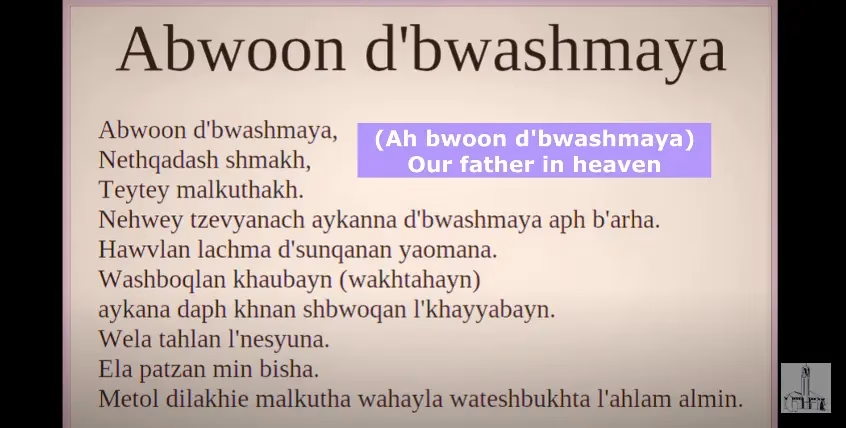
Jesus het waarskynlik Aramees in die daaglikse lewe gepraat. Om hierdie woorde in Sy moedertaal te hoor, verbind ons nie net met die vroeë Kerk nie, maar ook met Christus self.
Produced by: Christus Dominus Studios
Arrangement & vocals: Christus Dominus Studios
Aramaic transliteration based on scholarly reconstruction
English translation: Based on the Douay-Rheims Bible
ܐܒܘܢ ܕܒܫܡܝܐ (Abbun d’bishmayya — Our Father in heaven)
ܢܬܩܕܫ ܫܡܟ (Nithqadash sh’makh — Hallowed be Your name)
ܬܐܬܐ ܡܠܟܘܬܟ (Tethe malkuthakh — Your kingdom come)
ܢܗܘܐ ܨܒܝܢܟ (Nehwe sebyanach — Your will be done)
ܐܝܟܢܐ ܕܒܫܡܝܐ ܐܦ ܒܐܪܥܐ (‘Aykanah d’bishmayya af b’ar’a — On earth as it is in heaven)
ܗܒ ܠܢ ܠܚܡܐ ܕܣܘܢܩܢܢ ܝܘܡܢܐ (Hav lan lachma d’sunqanan yoma den — Give us this day our daily bread)
ܘܫܒܘܩ ܠܢ ܚܘܒܝܢ (Ushboq lan hawbayn — And forgive us our debts)
ܐܝܟܢܐ ܕܐܦ ܚܢܢ ܫܒܩܢ ܠܚܝܐܒܝܢ (‘Aykanah d’af ḥnan shbaqan l’hayyabayn — As we forgive our debtors)
ܘܠܐ ܬܥܠܢ ܠܢܣܝܘܢܐ (Wela ta’lan l’nissayon — And lead us not into trial)
ܐܠܐ ܦܨܢ ܡܢ ܒܝܫܐ (Ela passan min bisha — But deliver us from evil)
ܐܒܘܢ ܕܒܫܡܝܐ (Abbun d’bishmayya — Our Father in heaven)
ܢܬܩܕܫ ܫܡܟ (Nithqadash sh’makh — Hallowed be Your name)
ܬܐܬܐ ܡܠܟܘܬܟ (Tethe malkuthakh — Your kingdom come)
ܢܗܘܐ ܨܒܝܢܟ (Nehwe sebyanach — Your will be done)
Our Father in heaven
Hallowed be Your name
Your kingdom come
Your will be done
On earth as it is in heaven
Give us this day our daily bread
And forgive us our debts
As we forgive our debtors
And lead us not into trial
But deliver us from evil
ܐܒܘܢ ܕܒܫܡܝܐ (Abbun d’bishmayya — Our Father in heaven)
ܢܬܩܕܫ ܫܡܟ (Nithqadash sh’makh — Hallowed be Your name)
ܬܐܬܐ ܡܠܟܘܬܟ (Tethe malkuthakh — Your kingdom come)
ܢܗܘܐ ܨܒܝܢܟ (Nehwe sebyanach — Your will be done)
ܐܒܘܢ ܕܒܫܡܝܐ (Abbun d’bishmayya — Our Father in heaven)
ܢܬܩܕܫ ܫܡܟ (Nithqadash sh’makh — Hallowed be Your name) ܬܐܬܐ ܡܠܟܘܬܟ (Tethe malkuthakh — Your kingdom come)
ܢܗܘܐ ܨܒܝܢܟ (Nehwe sebyanach — Your will be done)
ܐܠܐ ܦܨܢ ܡܢ ܒܝܫܐ (Ela passan min bisha — But deliver us from evil)
“Die Onse Vader begin met ‘n groot vertroosting: ons mag “Vader” sê. Hierdie een woord bevat die hele geskiedenis van verlossing. Ons mag “Vader” sê omdat die Seun ons broer was en die Vader aan ons geopenbaar het; want danksy wat Christus gedoen het, het ons weer eens kinders van God geword.
Ons moet dus toelaat dat Jesus ons leer wat vader werklik beteken. Vir Jesus is Vader die bron van alle goeie dinge, die maatstaf van volmaaktheid van alle mense. “Maar Ek sê vir julle: Julle moet julle vyande liefhê en bid vir die wat julle vervolg, sodat julle kinders kan wees van julle Vader wat in die hemele is; want Hy laat die son opkom oor die slegtes en die goeies” Die liefde wat die Vader vir ons het en tot die einde toe volhard. Christus het daardie liefde aan die Kruis vervul deur vir sy vyande te bid. Ons noem God “Vader” omdat Hy die bron van alle liefde is, en in die Onse Vader nooi Jesus ons uit om kinders van hierdie liefdevolle Vader te word.
Ons moet nadink oor die dele van die Nuwe Testament waar Jesus uitbrei oor die Vader se liefde en vrygewigheid. “As julle wat sleg is, dan weet hoe om aan julle kinders die goeie te gee, hoeveel te meer sal julle Vader wat in die hemele is, goeie dinge gee aan die wat Hom bid!” “As julle wat sleg is, dan weet hoe om aan julle kinders die goeie te gee, hoeveel te meer sal die hemelse Vader die Heilige Gees gee aan die wat Hom bid!” Die gawe wat God aan ons gee, is die gawe van Homself, en dit beteken dat gebed werklik ‘n erkenning van hierdie waarheid is. God se gawe van Homself aan ons is die “een ding wat nodig is”. Gebed is ‘n manier om ons wense geleidelik te suiwer en reg te stel en om stadig te besef wat ons werklik nodig het: God en sy Gees.
Dr. Neil Douglas Klotz bestudeer Aramese taalkunde en Midde-Oosterse tradisie/kultuur vir byna 40 jaar. Volgens Dr. Klotz begin die Onse Vader met “Onse Vader”, ‘n vertaling van die woord “Abba”. Maar die werklike Aramese transliterasie is “Abwoon”, wat ‘n vermenging is van “Abba (vader)” en “woon” (baarmoeder), Jesus se erkenning van die manlike en vroulike bron van skepping.
Wat die korrekte uitspraak betref, sê Neil Douglas-Klotz dat hy hierdie formule gebruik het:
“Oosterse (Aramees-sprekende) Christene vandag (Assiriërs, Arameërs, Siriërs, Ortodokse, Kerk van die Ooste) stem nie saam oor die presiese uitspraak van hierdie woorde nie, maar in werklikheid is die werklike verskille baie gering. Hierdie uitspraak van die Aramese gebed van Jesus is in ‘n dialek wat beide die huidige Aramese uitsprake kombineer met ‘n ‘eetlepel’ van die antieke Hebreeuse intonasie wat Yeshua moontlik gebruik het. Trouens, die werklike verskille is so gering dat ‘n persoon van enige taal of agtergrond wat die Onse Vader leer, ander maklik kan verstaan en by hul geringe variasie kan aansluit.” Dit word ook beklemtoon, selfs al is die uitspraak nie presies soos Yeshua dit gesê het nie, kom ons ten minste baie nader aan die manier waarop Jesus dit uitgespreek het as wat Engels ooit sal. ‘n Mens kan die woorde voel, nie net daaraan dink nie.
Neil is veral bekend vir sy werk oor die Aramese Gebed van Jesus (“Die Onse Vader”), wat beide in sy boeke sowel as deur die liggaamsgebede met musiek gedeel word wat die afgelope 40 jaar oor die wêreld versprei het (’n vorm genaamd die Danse van Universele Vrede).
·Liedjie: Abwoon
deur Neil Douglas-Klotz
Around the World With the Aramaic Prayer of Jesus
℗ 2012 Neil Douglas-Klotz
Vrygestel op: 2012-04-04
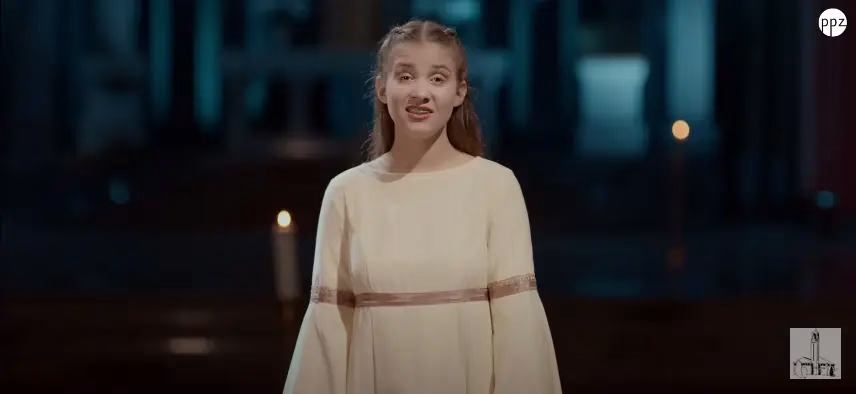
Karitas habundat
Karitas
habundat in omnia,
de imis excellentissima
super sidera
atque amantissima
in omnia,
quia summo regi osculum pacis
dedit.
Love abounds
Love
abounds in all,
from the depths exalted and excelling
over every star,
and most beloved
of all,
for to the highest King the kiss of peace
she gave.
Hildegard of Bingen (German: Hildegard von Bingen; Latin: Hildegardis Bingensis; c. 1098 – 17 September 1179), also known as Saint Hildegard and the Sibyl of the Rhine, was a German Benedictine abbess and polymath active as a writer, composer, philosopher, mystic, visionary, and as a medical writer and practitioner during the High Middle Ages. She is one of the best-known composers of sacred monophony, as well as the most recorded in modern history. She has been considered by scholars to be the founder of scientific natural history in Germany.
Hildegard’s convent elected her as Magistra (mother superior) in 1136. She founded the monasteries of Rupertsberg in 1150 and Eibingen in 1165. Hildegard wrote theological, botanical, and medicinal works, as well as letters, hymns, and antiphons for the liturgy. She wrote poems and supervised miniature illuminations in the Rupertsberg manuscript of her first work, Scivias. There are more surviving chants by Hildegard than by any other composer from the entire Middle Ages, and she is one of the few known composers to have written both the music and the words. One of her works, the Ordo Virtutum, is an early example of liturgical drama and arguably the oldest surviving morality play. She is noted for the invention of a constructed language known as Lingua Ignota.
St. Stanislav Girls’ Choir of the Diocesan Classical Gymnasium is among the best European choirs led by charismatic conductor Helena Fojkar Zupančič.
Choir contact: helena.fojkar.zupancic@stanislav.si
St. Stanislav Girls’ Choir of the Diocesan Classical Gymnasium
Conductor: Helena Fojkar Zupančič
Music: St. Hildegard of Bingen:
Caritas abundant in Omnia (Love Aboundeth in All Things)
soloist: Julija Skobe
O Virtus Sapientiae (O Virtue of Wisdom)
Translation: Tog Hoath, Neža Karlin
First Sopranos:
Pavlovič Arina
Mavrič Ana
Poredoš Jana
Suhodolnik Lucija
Skobe Julija
Otrin Eva
Rakar Polona
Strmčnik Ana
Lebar Anamarija
Novak Tonka
Second Sopranos:
Briški Katarina
Kumar Lea
Čarman Jasna
Zajec Ana
Avsenik Polona
Penko Neža
Vintar Zala
Dominko Diana
Martinjak Ruta
Škraba Eva Lucija
First altos:
Banko Marjeta
Škaler Eliška
Klavžar Lonja
Ivanc Elizabeta
Purnat Jasna
Lanišek Ema
Pirnat Eva
Brenčič Rahela
Šnajder Ana
Second altos:
Petrovič Josipina Julija
Grum Anka
Kavčič Lucija
Klobučar Klara
Sojar Ana Marija
Movrin Iva
Demšar Zala
Robnik Maja
A selection of Hildegard’s poems and tutoring in medieval singing: dr. Katarina Šter
Motion designer: Barbara Kanc
Musicians:
Percussion, Hurdy-Gurdy, Tempura: Janez Jocif
Fidel: Tilen Udovič
Gothic Harp: Urška Rihteršič
Recorder: Una Košir
Conceptual and artistic manager of the project:
Helena Fojkar Zupančič
Costume designer:
Irena Tomažin
makeup and dressing assistance:
Petra Skubic, Zala Klavs, Lea Ložak
Logistics: Jože Iskra Peter Ogorevc
Cathering: Gregor Ostanek
Production Crew:
Music producer:
Boris Rener
Balance Engineer and mastering: Iztok Zupan
Director of photography:
Juš Hrastnik
Primož Zevnik
Cameras:
Andraž Žigart
Matej Zagorc
Tadej Pernuš
Jan Presker
Juš Hrastnik
Primož Zevnik
Remote controlled camera
Matej Zagorc
Camera assistant
Jan Presker
Illuminator
Domain of Lušin
Tadej Pernuš
Lighting programmer
Sebastjan Zavrl
Construction of Scenography:
Gašper Polajžar
Domen Kovaček
Stage workers:
Goran Veselinović
Jan Novak
Borut Jalšovec
Nace Tomato
Darjan Vidmar
Stage constructions
Rok Zavrl (STRC)
Lighting equipment
Event Lighting
Stage equipment
MB Grip
elevator
RIWAL d.o.o.
Security
David Champaigne
Benjamin Bogovic
Material manager:
Jakob Zevnik
Editorial and color:
Primož Zevnik
Production manager
Gal Nagode
Producer:
Juš Hrastnik
Asisstant director:
Juš Hrastnik
Director and producer:
Primož Zevnik
Special thanks to The Society of Jesus Ljubljana and father Tomaž Mikuš, and special thanks to Ljubljana City Mayor: Zoran Janković
Special thanks to Archdiocese Ljubljana and auxiliary bishop Msgr. dr. Franc Šuštar
Recorded in cinema quality in St. Joseph Church, Poljane Ljubljana Slovenia
Productions: TAJUS, PPZ
About St. Jospeh National Shrine:
Built with the gifts of the Slovenian people, the church had to wait a long time for the interior to be arranged. In May 1941, a magnificent main altar with a statue of St. Jožef (made by sculptor Božidar Pengov). But this decoration only enriched the church for a short time. In 1949, the post-war authorities confiscated it, together with the two houses and all other property, in the pursuit of the Jesuits. On April 23, 1949, the two priests took the Blessed Sacrament to the cathedral. The next day, Holy Sunday, the bells no longer invited us to worship… During the visit of John Paul II. in 1996, it was returned again and now it is renewed waiting for the blessing. It housed a film studio in the post-war years. It was rebuilt and damaged, so the state restored it and returned it to its former beauty.